
Our Purpose
The purpose of The Visionary Dolls is to address the often-overlooked connection between trauma and violence in women’s lives. Many women who have experienced abuse, exploitation, and long-term emotional harm are left without the tools or support needed to process what they’ve been through. As a result, pain can manifest as anger, aggression, or harmful behaviors toward themselves or others. Our purpose is to interrupt that cycle by creating a space where women feel seen, understood, and supported without judgment.
Through community, education, and shared lived experience, we aim to help women recognize the root of their behaviors, develop emotional awareness, and build healthier coping strategies. We are committed to guiding women toward healing, accountability, and self-empowerment so they can move beyond survival mode and begin to live with stability, purpose, and peace.

Our Mission
At The Visionary Dolls, our mission is to support women whose experiences with trauma have shaped how they respond to the world, including through violence, emotional distress, or silence. We create a safe and understanding space where women can begin to unpack their experiences without judgment.
Rooted in lived experience, we focus on helping women build emotional awareness, take accountability, and develop healthier ways to cope and respond. We believe healing is possible when women are given the tools, support, and community they deserve.
Our goal is to break cycles of pain and transform survival into stability, self-worth, and lasting change.
Meet Our Dedicated Team

Mariah Collins; Co-Founder & Director of Programs & Outreach
I was raised in a religious household, which made it difficult for me to speak out about what I experienced at 9 years old, something that deeply impacted me and that I carried in silence for many years. As I grew up, I was also bullied, which added to my struggles and shaped how I saw myself. I often felt alone in my emotions, trying to navigate life without the tools to understand or express what I was carrying inside.
Later, my parents’ divorce changed my sense of stability and led to difficult seasons, including periods of homelessness and being hurt by people I trusted. At 15, I survived a violent situation that left me shaken and searching for safety. By 16, I was emancipated and entered a marriage hoping to find love and stability, but instead experienced emotional and physical harm. During different seasons of my life, I worked as a dancer, where I witnessed the realities of exploitation and was exposed to environments that added to my emotional weight. I also struggled deeply with anger and, at times, reacted in ways I now understand were rooted in unresolved pain. At 21, I lost my mother, which was one of the most devastating losses of my life and left a lasting impact on my identity and emotional well-being. After that, I entered another marriage where I continued to feel unseen and not enough, experiencing ongoing emotional harm that further affected my sense of self.
Today, I am a mother of four children, and they are one of my greatest sources of purpose and motivation. Co-parenting has not always been easy, but it has taught me growth, patience, and accountability. My children have also shown me how important it is to break cycles and lead by example, so they understand that life is not defined by what you go through, but by how you choose to grow from it.
Through everything, my faith in God has been my foundation. Even when I felt lost, it was my faith that continued to carry me forward and give me strength when I had none of my own. Healing has not been linear, but it has been real. I am learning to forgive myself, understand my past, and walk in purpose rather than pain.
Today, I use my story to uplift and support other women, reminding them that they are not alone and that healing is possible no matter where they start. I am no longer just surviving—I am living.
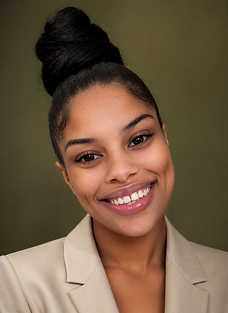
Marijah Brooks Co-Founder & Executive Director
I was raised in a broken home by two logically driven parents, where emotions were not openly taught, expressed, or prioritized. Because of that, I grew up not fully understanding how to process what I felt. Anger became the only emotion I truly knew how to recognize or express, and over time, it became the way I responded to pain, confusion, and instability—even into my adult years.
I was exposed to things at a young age that shaped how I saw the world far too early. As a teenager, I experienced sexual trauma that deeply impacted me, and later became a mother at 17 while still trying to navigate my own healing. As I got older, I continued struggling with unresolved emotions and emotional regulation, often processing everything through anger.
During my early adulthood, I worked as a dancer, where I witnessed the realities of exploitation and continued to navigate emotional struggles I did not yet have the tools to fully understand. For years, I carried everything internally, without healthy outlets or support to process what I had been through.
I am a mother of four children, and they became a major turning point in my life. They gave me purpose and made me realize I needed to change if I wanted to break cycles and not pass down the same emotional struggles I grew up with. My husband has also played an important role in my healing journey, supporting me in learning how to manage my anger and express my emotions in healthier ways.
Today, I am still healing, but I have found my voice. I understand myself in ways I never did before, and I am learning how to move through life with more awareness and peace. Sharing my story is part of that healing, and it is what drives me to create space for other women to feel seen, understood, and supported. I now know that change is possible—and I am living proof of it.
.png)
Jasmine Miller Director of Operations
I grew up in a single-parent household where rules were strict and emotions didn’t carry much weight. At five years old, I experienced my first heartbreak I lost my auntie. It was my first encounter with death, and it left a lasting mark. I was labeled “weird” the girl who talked to herself, answered her own questions, and held onto toys longer than most. Looking back, I see that I was creating a safe space for myself, a way to process feelings I didn’t have room to express.
At school, I was bullied for my lisp, mostly by boys. Being called “stupid” slowly broke down my self-esteem, and I started putting everyone before myself. I believed my feelings didn’t matter, and that belief surrounded me with broken people and unhealthy relationships. By 12, I was drinking. By 16, I was caught in a toxic cycle drinking, riding around, meeting random men, and following my friend’s lead, even when it led to drugs and situations I didn’t truly choose.
At 17, I lost my virginity to the wrong person and ended up with an infection. If it weren’t for my parent’s support, I might have ignored it. After that, I went through a phase of searching for validation, for connection, for something I couldn’t name. I let a friend’s opinion cost me someone I genuinely cared about. Deep down, I wanted a family I think I was trying to create what I never saw growing up. Instead, I kept losing myself in relationships, often with older men, still seen as “the weird girl” no one really understood.
At 19, I chose myself. I slowed down the drinking, cut off toxic friendships, and started rebuilding my self-worth. I refused to be anyone’s emotional punching bag anymore. Today, I’m a mother to an incredible child and a business owner working with children giving them the support I needed. I’m still learning to put myself first, but I’ve grown. And if there’s one thing I know, it’s this: your struggles matter. Your voice matters. You deserve to be heard, and you deserve to heal.
.png)
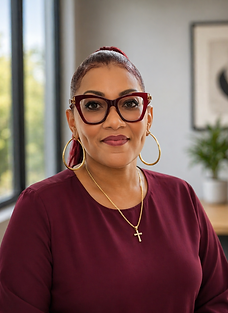
Nica Lawrence Director of Development
I am the youngest of 11 children, and I grew up in a close knit family that shaped much of who I am. In my early years, I lived a fairly carefree life, but as I got older, I began making choices in relationships that ultimately led me down difficult paths. In my early 20s, I had my first child with a man who deceived me, and I struggled deeply in motherhood. I was in survival mode, focused more on providing than being emotionally present, something I now reflect on with both honesty and regret.
At another point in my life, I also experienced sexual assault, which added to the emotional weight I was already carrying. Later on, I got married and had another child, but in the process of trying to be everything for everyone, I completely lost myself in motherhood, marriage, and family roles. This ongoing stress began to take a serious toll on my health, leading to multiple surgeries and long-term health challenges.
The most pivotal moment in my life was losing my father, the person I was closest to. That loss sent me into a deep emotional spiral and forced me to confront parts of myself and my life I had avoided for years. Today, I don’t regret my past I own it. I can now see where I could have made different choices, and I understand those moments as lessons rather than failures.
I now find strength in watching my grandchildren grow and in showing up for my children and family in a more present and intentional way. I want other women to know that mistakes are not the end they are lessons. Change is always possible, and accountability is the first step toward becoming who you are meant to be.